Kargo Review (2026): DCO Pricing, Pros & Cons
Bottom line
Kargo is a Web SaaS tool for DCO (Dynamic Creative Optimization / DCO) in AdTech & Paid Media. Pricing: Custom / enterprise pricing. Best suited to DTC / eCommerce and Enterprise Brands. Editor ratings: AI autonomy L2 (workflow copilot); moat score 3.6/5.0 (Proprietary moat). Fact-checked by MarTechRadar Research Desk on Oct 14, 2026.
Mobile-first omni-channel advertising platform delivering high-impact dynamic creative optimization, custom interactive ad formats, and automated.
Is Kargo worth it in 2026? Buyer fit & when to walk away
Choose Kargo if (Best Fit)
- Target ICP & Stack Fit: You operate as DTC / eCommerce and Enterprise Brands requiring a Web SaaS deployment for DCO.
- L2 Architecture & Defensibility: Deep direct publisher integrations and proprietary high-impact dynamic creative formats (such as adhesive banners and expandable canvases) optimized for mobile and multi-screen programmatic environments.
- Commercial Model Fit: Your procurement budget aligns with Custom / enterprise pricing.
Walk away from Kargo if (Deal-Breakers)
- Walk away if you need published self-serve pricing: Kargo is sold by custom quote.
- Walk away if your workflow cannot tolerate publisher layout dependencies: High-impact custom units require direct integration with underlying publisher DOM structures, causing rendering anomalies if editorial CMS templates shift unexpectedly.
- Walk away if creative asset production latency is a deal-breaker for your team: Unlike pure self-serve automated graphic generators, assembling complex dynamic units requires dedicated onboarding and asset pre-formatting cycles.
Kargo pricing, free plan & scorecard at a glance
| Pricing | Custom / enterprise pricing |
|---|---|
| Free plan | No / not disclosed |
| Delivery | Web SaaS |
| Audience | DTC / eCommerce, Enterprise Brands |
| AI autonomy level | L2 · Workflow copilotEditor-verified |
| Moat tier & score | 3.6 / 5.0 · Proprietary moatEditor-verified |
| Funding | Undisclosed |
| Founders | Harry Kargman |
| Company size | 201-500 employees |
| Governance & docs | Terms ↗ · Privacy ↗ |
| Headquarters | New York, NY |
| Founded | 2003 |
| Last verified | Oct 14, 2026 |
Kargo pros & cons: strengths vs. operational limitations
Pros: core strengths & capabilities
- High-impact dynamic creative optimization: (DCO) formats across mobile, desktop, CTV, and social
- Interactive responsive ad units: including adhesive units, expandable canvases, and streaming video
- Direct supply-side publisher layout: integrations and programmatic delivery pipelines
- Omnichannel audience targeting and dynamic creative assembly engine
Cons: operational limitations & risks
- Publisher Layout Dependencies: High-impact custom units require direct integration with underlying publisher DOM structures, causing rendering anomalies if editorial CMS templates shift unexpectedly.
- Creative Asset Production Latency: Unlike pure self-serve automated graphic generators, assembling complex dynamic units requires dedicated onboarding and asset pre-formatting cycles.
- Cross-Platform Environment Constraints: In-app webviews and strict browser sandbox privacy policies occasionally throttle interactive dynamic features and audience measurement telemetry.
Kargo TCO & deal-breaker stress test
Simulate 12-month stepped TCO, hidden cost multipliers, contract lock-in exposure, and stack failure modes using only facts verified by MarTechRadar Research Desk on 2026-10-14.
Kargo triggers high-severity friction under your 5-seat / $800/mo constraints. Benchmark the verified subtrack alternatives below before committing.
- Moat Score
- 3.6 / 5.0
- AI Autonomy
- L2
- Free Tier / Trial
- None disclosed
Triggered audit signals & failure modes
- Opaque Enterprise Quoting vs. SMB/Mid-Market BudgetVerified Pricing Ledger
Kargo does not disclose a public self-serve floor (Custom / enterprise pricing). Buyers with a $800/mo cap face high sales-qualification friction.
- Sales-Gated Contract TermsFact-checked by MarTechRadar Research Desk
Kargo follows an enterprise-only commercial framework. Software access and managed delivery services are structured without published off-the-shelf tiers.
- Primary Operational Bottleneck: Publisher Layout DependenciesAudit by MarTechRadar Research Desk
High-impact custom units require direct integration with underlying publisher DOM structures, causing rendering anomalies if editorial CMS templates shift unexpectedly.
Test a custom Kargo budget or stack constraint
Lower 5-seat floor (~$99/mo vs. Custom Quote) · Transparent self-serve entry without mandatory annual lock-in
Kargo integrations, API, security & compliance stack
High-impact dynamic creative optimization formats across mobile, desktop, CTV, and social
Kargo AI moat & DCO positioning
Deep direct publisher integrations and proprietary high-impact dynamic creative formats (such as adhesive banners and expandable canvases) optimized for mobile and multi-screen programmatic environments.
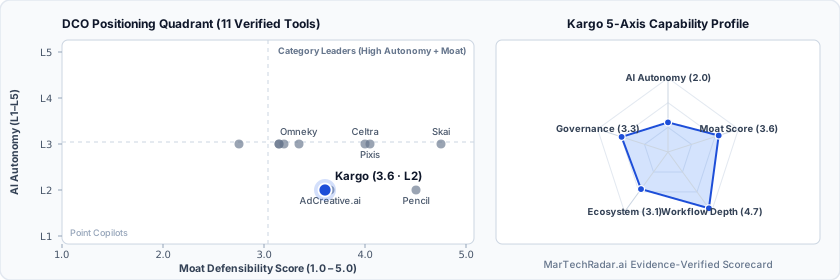
Kargo in-depth review, pricing & architecture analysis
Editor sign-off: Oct 14, 2026. How profiles are made.
What is Kargo? Overview & background
Architected around the technical fragmentation between programmatic media buying and custom mobile experiences, Kargo operates as an enterprise dynamic creative optimization and high-impact media platform. Headquartered in New York, NY, and founded in 2003, the company engineers proprietary digital ad experiences designed to bypass standard programmatic banner blindness. Targeted at brand marketers, performance media agencies, and premium publishers, Kargo bridges dynamic asset assembly with direct editorial integration across mobile, desktop, connected TV, and emerging retail media environments.
How Kargo works: architecture & workflow
At its technical core, the platform operates a Level 2 autonomous dynamic creative framework driven by proprietary client-side rendering engines. The pipeline ingests brand asset libraries, contextual publisher signals, and audience data feeds to dynamically assemble responsive rich-media ad units in real time. Rather than relying on static display tags, Kargo executes custom JavaScript and HTML5 containers—such as expandable canvases and adhesive units—that adjust dynamically to host application viewports and network bandwidth conditions through low-latency delivery nodes.
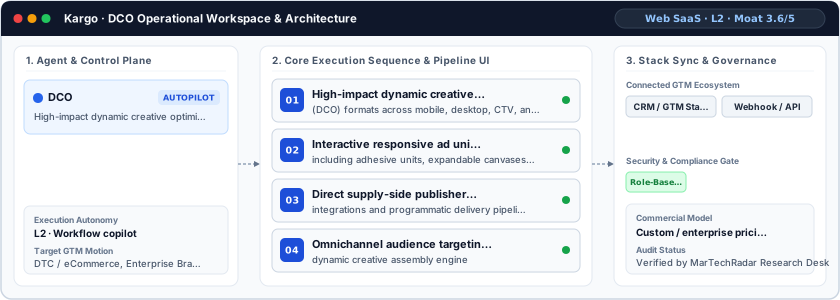
Kargo limitations, drawbacks & risks
Operational considerations and platform boundaries include:
- Publisher Layout Dependencies: High-impact custom units require direct integration with underlying publisher DOM structures, causing rendering anomalies if editorial CMS templates shift unexpectedly.
- Creative Asset Production Latency: Unlike pure self-serve automated graphic generators, assembling complex dynamic units requires dedicated onboarding and asset pre-formatting cycles.
- Cross-Platform Environment Constraints: In-app webviews and strict browser sandbox privacy policies occasionally throttle interactive dynamic features and audience measurement telemetry.
Kargo pricing, plans & cost breakdown
Kargo follows an enterprise-only commercial framework. Software access and managed delivery services are structured without published off-the-shelf tiers. Commercial pricing is available on request through tailored enterprise sales quotes based on organizational scale and seats, bundled media spend commitments, and format customization requirements across programmatic and direct publisher pipelines.
| Plan / Tier | Verified Price & Billing | Included Scope & Contract Terms |
|---|---|---|
| Enterprise / Custom | Custom quote | Custom-quoted plan; terms come from the vendor's sales team. |
How Kargo compares vs. competitors & alternatives
Within the creative optimization ecosystem, Kargo occupies a distinct infrastructure position compared to tools like Abyssale, AdCreative.ai, and 7Pi. While Abyssale and AdCreative.ai prioritize automated bulk banner production via design APIs and generative models for social feeds, Kargo couples dynamic creative optimization directly with specialized multi-screen delivery mechanics. Enterprise brand advertisers with substantial media budgets choose Kargo over pure-play image generation SaaS tools when seeking guaranteed high-impact viewability and custom interactive canvases across premium publisher networks.
Direct competitors & market radar
Top algorithmic competitors based on category positioning, capability overlap, and ICP alignment.
Frequently asked questions about Kargo
Does Kargo publish pricing or require an enterprise quote?
Kargo pricing: Custom / enterprise pricing. No free plan is publicly disclosed. Kargo follows an enterprise-only commercial framework. Software access and managed delivery services are structured without published off-the-shelf tiers.
What are the top Kargo alternatives in DCO?
Verified DCO alternatives include Incremental (Custom / enterprise pricing), Lapis (From $99/mo), Cuttable ($1,110–$3,298/mo · Enterprise plan), Browsi (Custom / enterprise pricing). Within the creative optimization ecosystem, Kargo occupies a distinct infrastructure position compared to tools like Abyssale, AdCreative.ai, and 7Pi.
What are the main limitations and trade-offs of Kargo?
Operational considerations and platform boundaries include: Publisher Layout Dependencies: High-impact custom units require direct integration with underlying publisher DOM structures, causing rendering anomalies if editorial CMS templates shift unexpectedly. Walk away if you need published self-serve pricing: Kargo is sold by custom quote.
Verified sources & evidence trail
- Official product domain: https://kargo.com
- Commercial pricing verification: Verified against official vendor pricing policy (Custom / enterprise pricing)
- Verified corporate entity profiles (
sameAs): LinkedIn Company Profile · Crunchbase Entity Record - First-party governance & documentation links: Terms · Privacy
- Editor sign-off: Oct 14, 2026 (how profiles are made).
