Adzooma Review (2026): DCO Pricing, Pros & Cons
Bottom line
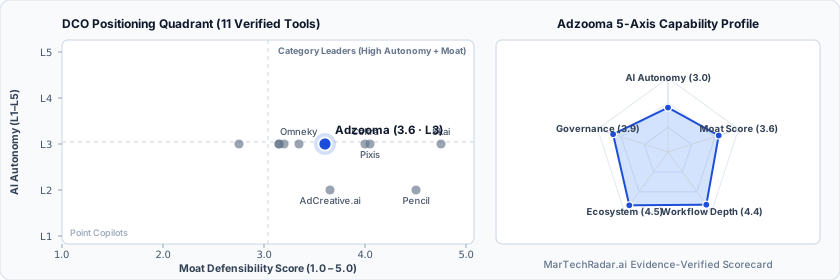
Adzooma is a Web SaaS tool for DCO (Dynamic Creative Optimization / DCO) in AdTech & Paid Media. Pricing: Free plan · $69–$179/mo. Best suited to DTC / eCommerce and Creators / Solo. Editor ratings: AI autonomy L3 (conditional automation); moat score 3.6/5.0 (Proprietary moat). Fact-checked by MarTechRadar Research Desk on Oct 12, 2026.
Multi-channel advertising optimization platform automating bid management, campaign auditing, and anomaly detection across search and paid social networks.
Is Adzooma worth it in 2026? Buyer fit & when to walk away
Choose Adzooma if (Best Fit)
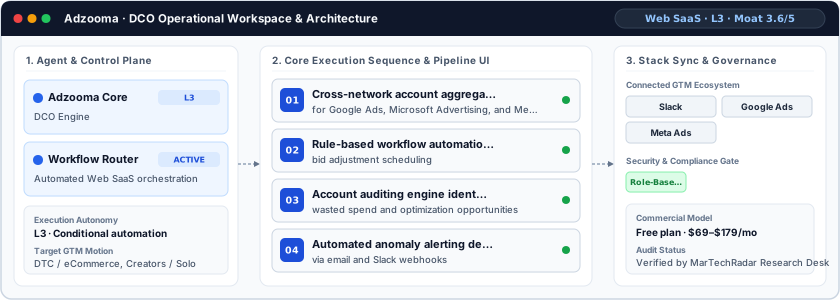
- Target ICP & Stack Fit: You operate as DTC / eCommerce and Creators / Solo requiring a Web SaaS deployment for DCO, with verified ecosystem connectivity for Slack, Google Ads, Meta Ads.
- L3 Architecture & Defensibility: Adzooma maintains defensibility through aggregate telemetry across Google, Microsoft, and Meta networks, combined with proprietary rule-based optimization algorithms and automated anomaly alerts that simplify cross-channel budget governance.
- Commercial Model Fit: Your procurement budget aligns with Free plan · $69–$179/mo and want a self-serve free tier for zero-cost initial validation.
Walk away from Adzooma if (Deal-Breakers)
- Walk away if your workflow cannot tolerate API ingestion latency: Telemetry refresh cadences depend on upstream network rate limits and polling frequencies, preventing instantaneous execution during intraday auctions.
- Walk away if dynamic creative synthesis gaps is a deal-breaker for your team: The system lacks native dynamic creative optimization pipelines, leaving asset-level rendering, video variations, and visual copy testing to third-party tooling.
Adzooma pricing, free plan & scorecard at a glance
| Pricing | Free plan · $69–$179/moVendor pricing page |
|---|---|
| Free plan | Yes |
| Delivery | Web SaaS |
| Audience | DTC / eCommerce, Creators / Solo |
| AI autonomy level | L3 · Conditional automationEditor-verified |
| Moat tier & score | 3.6 / 5.0 · Proprietary moatEditor-verified |
| Funding | Series A |
| Total funding | £7M |
| Founders | David Sharpe, Robert Wass |
| Company size | 51-200 employees |
| Ecosystem integrations | Slack, Google Ads, Meta Ads |
| Governance & docs | Privacy ↗ |
| Headquarters | Nottingham |
| Founded | 2015 |
| Last verified | Oct 12, 2026 |
Adzooma pros & cons: strengths vs. operational limitations
Pros: core strengths & capabilities
- Cross-network account aggregation: for Google Ads, Microsoft Advertising, and Meta Ads
- Rule-based workflow automation and bid adjustment scheduling
- Account auditing engine identifying: wasted spend and optimization opportunities
- Automated anomaly alerting delivered: via email and Slack webhooks
Cons: operational limitations & risks
- API Ingestion Latency: Telemetry refresh cadences depend on upstream network rate limits and polling frequencies, preventing instantaneous execution during intraday auctions.
- Dynamic Creative Synthesis Gaps: The system lacks native dynamic creative optimization pipelines, leaving asset-level rendering, video variations, and visual copy testing to third-party tooling.
- Attribution Model Rigidity: Optimization logic relies primarily on direct ad-network conversion reporting, lacking multi-touch algorithmic attribution across blended search and social paths.
Adzooma TCO & deal-breaker stress test
Simulate 12-month stepped TCO, hidden cost multipliers, contract lock-in exposure, and stack failure modes using only facts verified by MarTechRadar Research Desk on 2026-10-12 · Capture SHA 22ac90c7.
Adzooma aligns with your 5-seat / $800/mo profile. Review the walk-away triggers and contract levers below before deployment.
- Moat Score
- 3.6 / 5.0
- AI Autonomy
- L3
- Free Tier / Trial
- Free plan
Triggered audit signals & failure modes
- Published Self-Serve Entry FloorVerified Pricing Ledger
Adzooma publishes a transparent entry point (Free plan · $69–$179/mo) with a free tier for initial validation before committing.
- Primary Operational Bottleneck: API Ingestion LatencyAudit by MarTechRadar Research Desk
Telemetry refresh cadences depend on upstream network rate limits and polling frequencies, preventing instantaneous execution during intraday auctions.
Test a custom Adzooma budget or stack constraint
Fits within $800/mo budget (From $499/mo)
Adzooma integrations, API, security & compliance stack
Adzooma AI moat & DCO positioning
Adzooma maintains defensibility through aggregate telemetry across Google, Microsoft, and Meta networks, combined with proprietary rule-based optimization algorithms and automated anomaly alerts that simplify cross-channel budget governance.
Adzooma in-depth review, pricing & architecture analysis
Editor sign-off: Oct 12, 2026. How profiles are made.
What is Adzooma? Overview & background
Established with £7M in venture backing and founded in 2015 in Nottingham, United Kingdom, Adzooma develops cross-channel campaign governance software for digital agencies and in-house growth marketers. Operating across search and paid social channels, the platform targets performance marketing teams seeking unified oversight across fragmented advertising networks. Rather than deploying disconnected platform-native dashboards, media buyers utilize the system to centralize telemetry across Google Ads, Microsoft Advertising, and Meta, stabilizing daily administrative workflows across complex multi-account portfolios.
How Adzooma works: architecture & workflow
Architecturally, the platform functions at an L3 autonomy profile, utilizing programmatic API connections into Google Ads, Microsoft Advertising, and Meta Graph endpoints. Its ingestion engine queries ad group performance metrics, cost data, and conversion events to populate an analytical evaluation ledger. An algorithmic rule processor runs deterministic checks against this data, surfacing prescriptive recommendations such as negative keyword additions, bid updates, and reallocation actions. Teams execute adjustments manually via one-click approval queues or authorize automated background rules triggered by custom metric thresholds.
Adzooma limitations, drawbacks & risks
Operational considerations and platform boundaries include:
- API Ingestion Latency: Telemetry refresh cadences depend on upstream network rate limits and polling frequencies, preventing instantaneous execution during intraday auctions.
- Dynamic Creative Synthesis Gaps: The system lacks native dynamic creative optimization pipelines, leaving asset-level rendering, video variations, and visual copy testing to third-party tooling.
- Attribution Model Rigidity: Optimization logic relies primarily on direct ad-network conversion reporting, lacking multi-touch algorithmic attribution across blended search and social paths.
Adzooma pricing, plans & cost breakdown
Adzooma delivers its software-as-a-service through a tiered subscription architecture featuring a permanent entry tier starting from $0 per month. The free plan provides baseline PPC performance summaries, limited opportunity analysis, and basic notification hooks across connected accounts. Paid commercial tiers priced at $69 per month and $179 per month introduce expanded automation rules, increased alert limits, bespoke reporting, and higher data ingestion frequencies for enterprise agencies managing multi-brand portfolios.
How Adzooma compares vs. competitors & alternatives
While tools like AdCreative.ai, Abyssale, and 7Pi focus specifically on automated creative generation, visual versioning, and programmatic asset rendering, Adzooma focuses strictly on media distribution, bid adjustments, and account governance. It offers greater multi-network operational control than creative generation engines, though organizations requiring automated visual synthesis must integrate complementary dynamic creative platforms alongside Adzooma's rules-driven media administration layer.
Direct competitors & market radar
Top algorithmic competitors based on category positioning, capability overlap, and ICP alignment.
Frequently asked questions about Adzooma
How much does Adzooma cost in 2026?
Adzooma pricing: Free plan · $69–$179/mo. A permanent free plan is available. Adzooma delivers its software-as-a-service through a tiered subscription architecture featuring a permanent entry tier starting from $0 per month.
What are the top Adzooma alternatives in DCO?
Verified DCO alternatives include MAI Agents (Custom / enterprise pricing), Glitch Ads (From $499/mo), Persado (Custom / enterprise pricing), Bluma (Custom / enterprise pricing). While tools like AdCreative.ai, Abyssale, and 7Pi focus specifically on automated creative generation, visual versioning, and programmatic asset rendering, Adzooma focuses strictly on media distribution, bid adjustments, and account governance.
What are the main limitations and trade-offs of Adzooma?
Operational considerations and platform boundaries include: API Ingestion Latency: Telemetry refresh cadences depend on upstream network rate limits and polling frequencies, preventing instantaneous execution during intraday auctions. Walk away if your workflow cannot tolerate API ingestion latency: Telemetry refresh cadences depend on upstream network rate limits and polling frequencies, preventing instantaneous execution during intraday auctions.
Verified sources & evidence trail
- Official product domain: https://adzooma.com
- Commercial pricing verification: https://adzooma.com/pricing/?
- Verified corporate entity profiles (
sameAs): LinkedIn Company Profile · Crunchbase Entity Record - First-party governance & documentation links: Privacy
- Editor sign-off: Oct 12, 2026 (how profiles are made).
